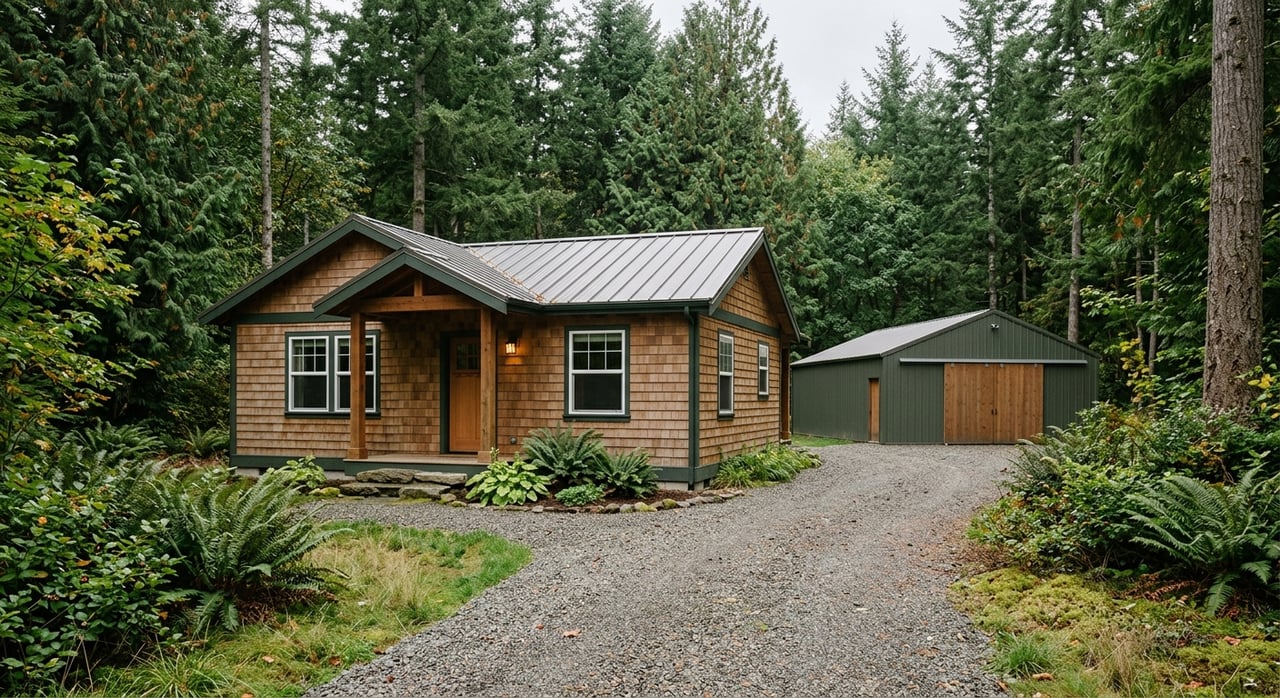
Dreaming of a little more land in Woodinville? Acreage and hobby-farm properties can offer space, privacy, and flexibility, but they also come with a very different set of rules than a typical suburban home. If you are thinking about buying land for animals, gardens, a barn, or simply room to spread out, it helps to know what to verify before you fall in love with a property. Let’s dive in.
Start With Jurisdiction and Zoning
One of the biggest mistakes buyers make is assuming a Woodinville mailing address tells them what a property can be used for. It does not. In this area, the City of Woodinville and unincorporated King County follow different zoning and land-use rules, so the exact parcel matters more than the address on the listing.
Within the city, zoning is built around residential and urban categories. Woodinville’s R-1 zone, for example, allows one unit per acre. In unincorporated King County, you may see rural and agricultural zones such as A-10, A-35, RA-2.5, RA-5, and RA-10, which can create a very different set of use standards.
That is why your first step should be confirming the parcel’s jurisdiction, base zoning, and any parcel-specific development conditions. In the City of Woodinville, land use may also involve review under the Unified Development Code, along with rules related to critical areas, tree protection, design review, SEPA, and the Shoreline Master Program.
Why parcel size is not enough
A larger lot does not automatically mean you can use it as a hobby farm. If you want chickens, goats, horses, fencing, a shop, or a barn, those uses depend on the exact zone, setbacks, critical-area constraints, and any development conditions tied to that parcel.
In other words, you should never assume use rights based on acreage alone. A two-acre parcel may still have limits that affect how much of the land is actually usable.
Go Beyond the Listing Sheet
Online listings can be a starting point, but they rarely tell the whole story for acreage property. King County specifically recommends researching a parcel through tools such as Parcel Viewer, iMap, eReal Property, and the Districts and Development Conditions report.
These resources can help you confirm details like jurisdiction, parcel size, zoning, present use, water and sewer or septic information, and possible critical-area designations. That kind of research can save you time, money, and disappointment later in the process.
Use maps carefully
Parcel maps are useful for screening properties, but they are not a substitute for legal review. King County notes that lot lines shown in Parcel Viewer are approximate and should not replace a survey or title review.
The same caution applies to Woodinville’s map tools. The city provides unofficial maps for critical areas, wetlands, sensitive geologic areas, and drainage basins, but those are approximate and not final determinations.
Watch for critical areas
Critical areas can have a major impact on what you can build or change. Wetlands, flood zones, steep slopes, landslide hazards, and similar conditions may reduce the usable area of a parcel and can trigger extra permit steps, added review, and more fees.
If a property looks perfect on paper but a large part of the lot is constrained, your plans may need to change. This is one reason many buyers of acreage properties choose to work with a professional consultant familiar with local zoning and permit procedures.
Access Can Change the Whole Deal
A beautiful property loses value quickly if access is complicated or expensive. In Woodinville-area acreage purchases, road access, driveway rights, and maintenance obligations deserve close attention.
If the property is served by a private road, King County will not maintain it. The county’s road standards require a recorded maintenance covenant that addresses upkeep, cost sharing, easements, and enforcement. The road must also remain accessible for emergency and public-service vehicles.
Questions to ask about access
Before you move forward, make sure you understand:
- Whether the road is public or private
- Whether there is a recorded road-maintenance covenant
- Whether the property uses a joint-use driveway
- Whether access easements are properly recorded
- Whether easement width could affect future use or improvements
These details may not sound exciting, but they can affect both your monthly costs and your long-term plans for the property.
Wells and Water Need Extra Attention
If your future property is not connected to city water, the water source becomes a key part of your due diligence. Private wells are common on rural and semi-rural parcels, and well ownership comes with ongoing responsibilities.
Washington Department of Health guidance says private well owners are responsible for testing their own water. Annual testing for coliform bacteria and nitrate is recommended. The agency also notes that, in most counties, a seller may need to provide water-sampling results when a home with a private well is bought or sold.
Water rights matter too
For larger parcels, it is also important to investigate the right to use water before drilling a well. King County Public Health specifically advises landowners to look into water-right and availability questions before assuming a parcel can support a new well.
That means you should ask not only whether a well exists, but also what documentation is available and what your legal and practical water options are going forward.
Septic Systems Affect Daily Use
Many acreage and hobby-farm properties in and around Woodinville rely on septic systems. A septic system is not just another utility. It affects maintenance, transfer requirements, and how you use the land.
Washington Department of Health says gravity septic systems should be inspected at least every three years, while other systems should be inspected yearly. A typical tank is usually pumped every three to five years. On top of that, King County’s on-site sewage rules were revised effective April 1, 2025, so current local requirements matter.
What buyers should confirm before closing
If a property is on septic, ask for:
- The septic inspection report
- Septic system records and location details
- Information about the drainfield and replacement area
- Confirmation of the county’s transfer requirements
- Any required OSSM notice information before closing
King County requires septic transfer steps during a sale, including providing the inspection report to the buyer before closing and, in many cases, recording the OSSM notice at the recorder’s office.
Plan improvements around the system
If you hope to add a barn, corral, parking area, or other improvements, septic placement matters. The Department of Health advises keeping heavy equipment and livestock off septic tanks, drainfields, and replacement areas.
That means the location of the system can shape how you use the property day to day. A parcel may have plenty of land on paper, but the practical layout could be more limited than it first appears.
Hobby-Farm Living Is Still Regulated Living
Woodinville-area acreage can offer a rewarding lifestyle, but it is not a free-for-all. Owning more land usually means more responsibility, more maintenance, and more local rules to understand.
Washington’s right-to-farm law protects qualifying agricultural activities and forest practices from nuisance claims in certain situations when they follow good practices and were established before surrounding non-agricultural uses, unless they substantially affect public health and safety. The law recognizes that agricultural activity can include things like noise, odors, dust, machinery, irrigation pumps, and livestock movement.
What that means for you
If you buy acreage or a hobby-farm property, you should expect a different lifestyle than you would on a standard subdivision lot. Rural living can include ordinary farm sounds, smells, and upkeep that come with the area.
At the same time, your own plans for animals or structures still depend on the exact zoning and parcel conditions. A property may feel rural, but legal use is controlled by code, setbacks, environmental constraints, and permit review.
A Smart Buyer’s Checklist
Before you buy acreage or a hobby farm in Woodinville, slow down and verify the basics. A little extra research up front can help you avoid expensive surprises later.
Here is a practical checklist to guide your next steps:
- Confirm whether the property is in the City of Woodinville or unincorporated King County
- Verify the base zoning and any parcel-specific development conditions
- Review parcel maps, tax records, and development-condition reports
- Investigate wetlands, steep slopes, flood areas, and other critical areas
- Confirm public or private road access and maintenance obligations
- Review easements and joint-use driveway issues
- Ask for well records, water test results, and water-right information if applicable
- Request septic inspection records, system location, and transfer documentation
- Check whether your intended uses, such as animals or outbuildings, are allowed on that exact parcel
Why Local Guidance Matters
Buying acreage is rarely as simple as comparing price per square foot. You are evaluating land use, access, utilities, maintenance, and long-term usability all at once. That is why many buyers benefit from clear, local guidance from the start.
With the right approach, you can find a property that fits your goals and understand the questions to answer before you commit. If you are exploring acreage or hobby-farm properties in Woodinville and want practical, step-by-step support, reach out to Lizbeth Loreto for a free consultation.
FAQs
What should I verify before buying acreage in Woodinville?
- You should confirm the parcel’s jurisdiction, zoning, development conditions, access, water source, septic status, and any critical-area constraints before moving forward.
Can I keep animals on a Woodinville acreage property?
- Maybe, but you should not assume that acreage alone allows animals. Uses such as chickens, goats, or horses depend on the exact zoning, setbacks, critical areas, and parcel-specific conditions.
Do Woodinville hobby-farm properties always need special permits?
- Not always, but they may need additional review or permits if the parcel involves wetlands, steep slopes, flood areas, shoreline rules, tree protection, or other regulated conditions.
How do private roads affect a Woodinville acreage purchase?
- Private roads can affect maintenance costs, legal access, and emergency access. In King County, private roads are not maintained by the county and should have a recorded maintenance covenant.
What should I know about wells when buying rural property in King County?
- If a property uses a private well, you should review water testing, ask about water availability and use rights, and understand ongoing testing responsibilities.
What should I know about septic systems on a Woodinville-area property?
- You should review the inspection report, confirm transfer requirements, locate the drainfield and replacement area, and plan future improvements so they do not interfere with the septic system.