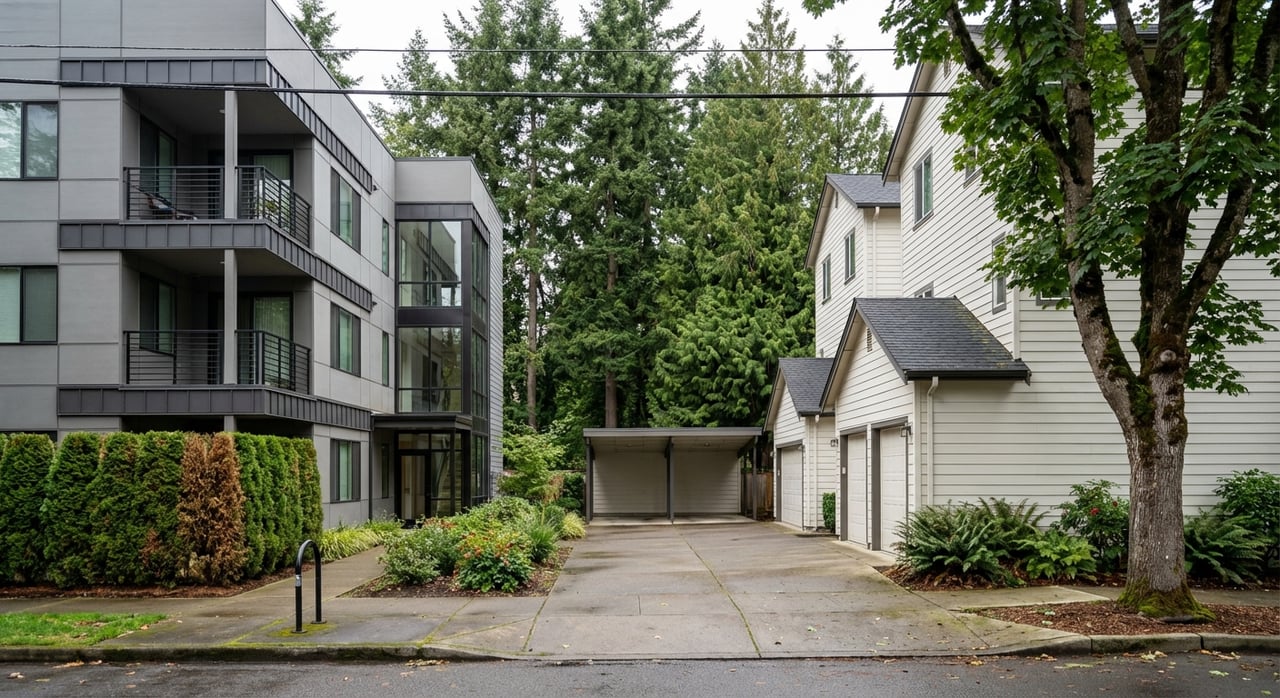
Trying to choose between a condo and a townhome in Kirkland? You are not alone. Many Eastside professionals want low-maintenance living that still fits their commute, parking needs and budget. In this guide, you will compare prices, HOA differences, commute and parking trade-offs, and real monthly cost examples so you can make a confident choice. Let’s dive in.
Kirkland market at a glance
Kirkland is a high-demand Eastside market. The recent citywide median sale price was around $1.13 million as of January 2026. Prices vary by neighborhood, building age, and home type, so focus on ranges and features instead of averages alone.
Condos in Kirkland span a wide range. Older or outer-area units often list around $350,000 to $600,000, while newer, central, or waterfront condos commonly fall in the $800,000 to $1.5 million plus band. Townhomes usually sit above entry-level condos, with many listings in the $700,000 to $1.5 million plus range depending on size, parking and location.
Neighborhoods differ on both price and walkability. Downtown and the Market/Moss Bay core typically command a premium and offer the most walkable lifestyle. Totem Lake tends to offer more entry-level options and a lower Walk Score. For a quick contrast, Totem Lake is rated “somewhat walkable” by Walk Score, while downtown blocks score much higher for daily errands and transit access. You can preview Totem Lake’s rating on the Walk Score site to see what “somewhat walkable” looks like in practice.
- See Totem Lake’s Walk Score rating: Walk Score neighborhood page
What you own with each type
A condo is a legal form of ownership. You own your interior unit and a shared interest in the common elements. A townhome is a building style with multiple levels and shared walls. Some townhomes are legally condos with shared exteriors covered by the association. Others are fee-simple lots where you are responsible for more exterior maintenance. The legal setup affects maintenance, insurance and sometimes financing.
Washington updated HOA and condo rules under the Washington Uniform Common Interest Ownership Act (WUCIOA). Some provisions already apply to new communities, and additional owner-protection and transparency requirements are scheduled to expand through 2026 and 2028. If you buy in a common-interest community, ask how the association is complying with current WUCIOA timelines and disclosure rules. You can review statutory provisions in the state code at RCW 64.90.
HOA costs and why they vary
Condo HOAs often cover exterior maintenance, roofs, building insurance on a master policy, landscaping, trash, common utilities and any amenities. Fees vary by building size, age and services. In Kirkland, many condo HOAs run about $300 to $600 per month, with some outliers higher or lower. Townhome HOAs can be lower when owners handle exterior upkeep, and higher if amenities are robust. For a good plain-English overview of how coverage can shift fees, see this local summary of HOA cost drivers: condo vs house ownership costs.
What to review before you buy
Always review the full resale certificate and association documents. Focus on:
- CC&Rs, bylaws and house rules
- Current budget, monthly assessments and reserve study
- Recent financials and board meeting minutes
- Master insurance policy summary and deductible
- Pending or recent special assessments and any major projects
- Delinquency rates and any disclosed litigation
Because state rules are evolving under WUCIOA, confirm delivery timelines and forms with your broker and escrow team.
Financing check: warrantable vs non-warrantable
Lenders treat some condo projects as warrantable, which makes them eligible for many conventional, FHA or VA loans. Others are non-warrantable, which can limit programs and require larger down payments or portfolio loans. Red flags include low reserves, high investor share, active litigation or heavy commercial space. Ask your lender early if your target building meets agency standards. A clear starting point is this overview of condo financing and building reviews: condo and townhouse financing basics.
Insurance basics: master policy vs HO-6 vs HO-3
Most condo associations insure the building on a master policy. You buy an HO-6 policy to cover interior finishes, personal property and liability, and to add loss-assessment coverage if needed. Fee-simple townhomes often require an HO-3 homeowner policy that covers the structure and can cost more than an HO-6. Always confirm what the master policy covers before you compare quotes. For a clear primer, see Condo 101: master policy and HO-6.
Commute, transit and parking
Kirkland is well located for Eastside commutes. Off-peak drives to Bellevue and Redmond often take 10 to 20 minutes, while Seattle can run 20 to 35 minutes via SR 520 or I-405. Peak-time variability is real, and SR 520 tolls are a recurring cost to include in your monthly budget.
Light rail is changing the regional picture. The Eastside 2 Line opened new segments between Bellevue and Redmond in 2024–2025, which improved cross-Eastside connectivity. Kirkland does not have a Link station, so your practical options are bus-to-Link or bus-only. Review Sound Transit and King County Metro routes for block-by-block access, and note planned RapidRide improvements. Read more at Sound Transit’s update: Light rail to Downtown Redmond opens.
Parking requirements also shape daily life. Kirkland’s zoning code sets minimum off-street parking by bedroom count for new attached housing, and it requires long-term bike parking in many projects. If you plan to host guests or rely on municipal garages downtown, check the city’s published guidance. Useful links:
- Minimum parking standards in the Kirkland Zoning Code: City code parking table
- Downtown guest and employee parking options and rules: Kirkland downtown parking
How this affects your choice:
- If you want to walk to coffee, the waterfront and frequent bus service, a downtown condo usually fits best.
- If you need guaranteed garage parking, regular EV charging or extra storage, many townhomes offer private 1 to 2 car garages and easier in-and-out.
Space, storage and lifestyle
Townhomes often deliver more square footage per dollar, plus bonus spaces for a home office or gym. Many include private garages and some small outdoor areas. Condos are usually lighter on maintenance, with the HOA handling exteriors and amenities, but they can have smaller interiors and less private storage.
Rules also matter. Pet limits, rental caps and short-term rental restrictions vary by community. If you plan to rent later, or you own multiple pets, confirm the CC&Rs and any caps in the resale packet before you write an offer. Clear rules upfront will protect your flexibility and future resale.
What will it cost each month?
Here are two simplified examples so you can see all-in carrying costs. Plug in your target list price and your HOA to personalize.
Assumptions used below:
- 30-year fixed interest rate about 6.09 percent based on Freddie Mac’s February 2026 PMMS average. See the weekly survey: Freddie Mac PMMS.
- King County effective property tax proxy about 0.84 percent of market price. This is a ballpark for planning. See county-level context: Tax Foundation property tax data.
- HOA and insurance: mid-range Kirkland condo fees often land around $300 to $600 per month, while townhome HOAs can be lower or higher depending on coverage. See cost drivers here: HOA cost overview. Condos typically use an HO-6 policy, while fee-simple townhomes often need an HO-3.
Example A: entry to mid condo
- Price: $650,000; down payment 20 percent; loan $520,000
- Principal and interest at 6.09 percent: about $3,148 per month
- Property tax at 0.84 percent: about $453 per month
- HOA fee example: $450 per month
- Condo insurance (HO-6) example: about $55 per month
- Estimated total: about $4,100 per month before utilities and a prudent assessment buffer. Add $100 to $300 per month for utilities and reserves.
Example B: larger townhome or higher-price unit
- Price: $1,130,000; down payment 20 percent; loan about $904,000
- Principal and interest at 6.09 percent: about $5,472 per month
- Property tax at 0.84 percent: about $788 per month
- HOA fee example: $300 to $500 per month (use $400 here)
- Homeowner insurance (HO-3) example: about $192 per month
- Estimated total: about $6,800 per month before utilities and a maintenance buffer.
Use this formula to estimate your own payment: monthly principal and interest + (annual property tax divided by 12) + HOA + owner insurance + utilities + an assessment or maintenance buffer.
Quick decision guide
- Choose a condo if you want the lowest exterior maintenance and a walk-to-everything lifestyle near transit. Expect higher HOA fees and higher list prices for prime downtown locations.
- Choose a townhome if you want a private garage, more interior space and simpler exterior control. Expect a higher purchase price and potentially higher mortgage payments.
- For any community, do three things before you offer: review the association’s resale packet and reserve study, confirm the condo’s warrantable status with your lender, and verify deeded parking details and EV options. Then plug property tax, HOA and insurance into your monthly budget to confirm comfort.
When you are ready to compare specific listings, I will walk you through HOA documents, lender questions and neighborhood fits, and coordinate your inspections and closing so you can move with confidence.
Ready to find your fit in Kirkland? Reach out to Lizbeth Loreto to compare options, run numbers and tour the right neighborhoods. Schedule Your Free Consultation. Hablo español.
FAQs
What is the key difference between condo and townhome ownership in Washington?
- A condo is a legal ownership structure that includes an individual unit and shared common elements through an HOA, while a townhome is a building type that can be either condo-style or fee-simple, which changes who maintains the exterior and what insurance you need.
How much are typical HOA fees in Kirkland for condos and townhomes?
- Many condo HOAs run about $300 to $600 per month, with some higher or lower; townhome HOAs can be lower when owners handle exteriors and higher when amenities or shared services increase costs.
How do I check if a condo is warrantable for a conventional loan?
- Ask your lender to review the project’s budget, reserves, owner-occupancy, litigation status and commercial space share; they will use a condo questionnaire to confirm if it meets agency standards or if you need a portfolio loan.
What should I review in the HOA resale packet before I buy?
- Read the CC&Rs, bylaws, budget, reserve study, recent minutes, insurance summary, special assessment history and any litigation disclosures to understand near-term costs and rules.
Does Kirkland have direct light rail access today?
- Not at this time; the new Eastside light rail segments connect Bellevue and Redmond, so Kirkland residents typically use bus-to-Link or bus-only routes for transit commutes.
What are parking rules for new attached homes in Kirkland?
- The city sets minimum off-street parking by bedroom count and requires long-term bike parking in many projects; always verify deeded stalls, guest parking policies and any municipal garage rules for downtown living.